Word Code - Cryptogram Puzzle
SayGames LtdWord
4.8117.00 Reviews
- Version
- 1.2.6
- Installs
- 10.00K
- Age Rating
- Everyone
Screenshots
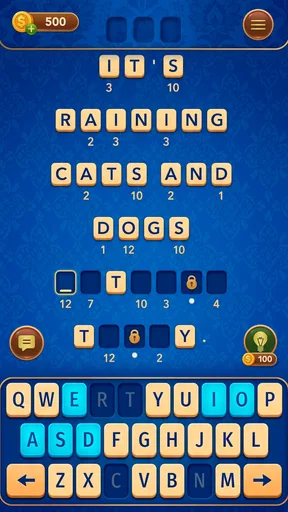
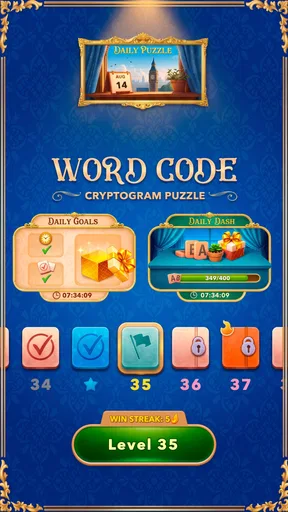
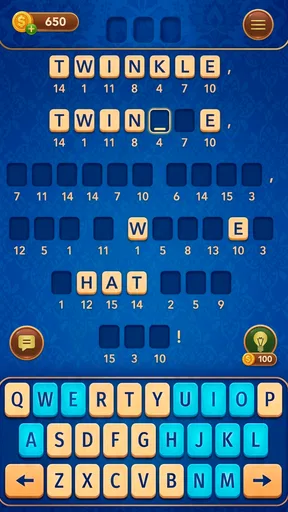
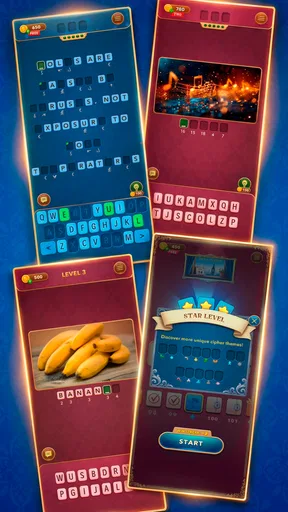
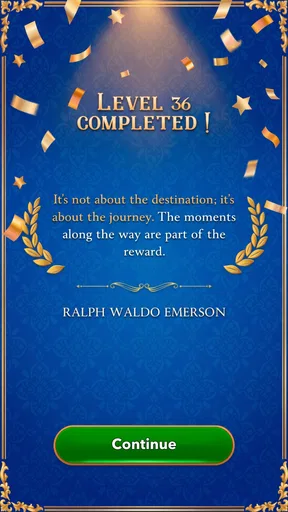
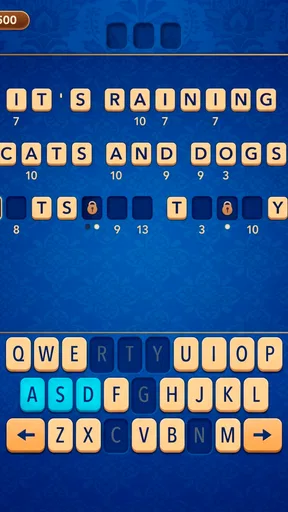
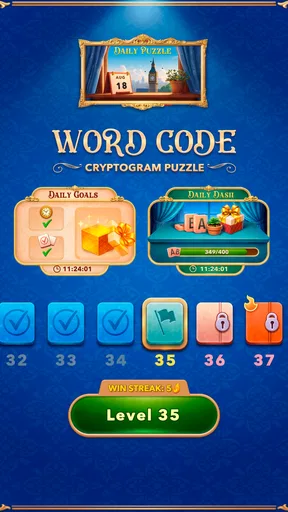
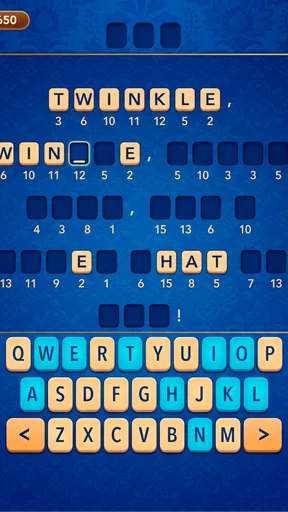
Our Review of Word Code - Cryptogram Puzzle
 Analysis by Appyee
I approached Word Code - Cryptogram Puzzle as a quick word game rather than something meant to replace a full daily puzzle routine. That distinction matters. Its appeal is the mix of word guessing, logic, and cryptogram solving: instead of relying on one kind of vocabulary challenge, it asks me to switch between recognizing patterns and making deductions. After spending time with it, I see it as a good fit for short mental breaks, especially if you enjoy puzzles that reward patience more than fast tapping.
The game is free to download and is made by SayGames Ltd. It is listed for Everyone, works on devices running Android 8.0 or later, and the current version is 1.2.6. Those details make it accessible to a broad audience, but the real decision is more personal: do you want a compact word-and-logic experience, or are you looking for a deeper crossword, an anagram specialist, or a competitive word game? I would choose differently depending on the answer.
What to consider before choosing Word Code
I would use this section to decide whether the game’s compact, self-contained puzzles fit the way you actually spend spare minutes. I’d also weigh its free starting point against the in-app purchase range and ask whether I want a quiet solo challenge or the routine and variety of a larger puzzle app. That distinction matters most once the first burst of curiosity wears off.
The right kind of challenge for your spare minutes
My first test for a puzzle game is whether it fits naturally into everyday life. This one works best when I have a few quiet minutes and want something more engaging than scrolling. I can start with a word challenge, think through a clue, and stop without feeling that I have abandoned a long campaign. That makes it suitable for a commute, a waiting room, or the short gap between two tasks.
It is not the ideal choice if your main goal is a long, uninterrupted session with a strong story, elaborate progression, or a large competitive community. The design sits closer to a pocket puzzle book than to a traditional action game. The satisfaction comes from solving the current problem, not from building a character or mastering a complicated control system.
How I judge a word puzzle like this
I look for three things: whether the clues feel fair, whether the logic remains interesting after the initial novelty fades, and whether the game lets me recover from a wrong idea without wasting too much time. A good cryptogram should make me feel that the answer was discoverable, even when I missed it at first. A good word game should also test vocabulary without turning every difficult puzzle into a guessing contest.
Word Code is most appealing when I treat each puzzle as a small investigation. I scan for repeated patterns, compare possible letters, and use familiar word shapes to narrow the field. That approach is more rewarding than tapping random answers. My practical advice is to slow down whenever several letters seem plausible. In a cryptogram, one mistaken assumption can make every later deduction look wrong.
Who will probably enjoy it
I would recommend it to people who like word searches, coded messages, deduction puzzles, and casual brain-training games, but who do not necessarily want a strict daily schedule. It can also work for someone returning to word puzzles after a long break because the central idea is easy to understand: identify patterns, test possibilities, and solve the phrase or word in front of you.
It is less suitable for players who dislike reading, have little patience for revisiting a clue, or want a game that constantly changes its visual action. It may also disappoint dedicated crossword fans who expect broad clue variety, a carefully themed grid, and the feeling of completing a large puzzle. This is a more focused experience, and its strength depends on whether that focus matches your taste.
A realistic way to use it
Imagine having ten minutes before a meeting. I would open the game, attempt one puzzle, and use the first minute to identify repeated symbols or likely short words rather than immediately searching for a complete answer. If I became stuck, I would leave the puzzle and return later instead of forcing a random guess. That small habit makes the session calmer and turns the game into a useful reset rather than another source of frustration.
For a family setting, I could also see it working as a shared screen activity, with one person suggesting possible words and another checking the pattern. The Everyone age rating supports that broad accessibility. Still, the experience depends on the group’s vocabulary, so it is better as a cooperative conversation starter than as a formal multiplayer contest.
Where Word Code stands out
Here I’d focus on the lasting appeal of shifting between word recognition and cryptogram-style deduction, rather than expecting one puzzle format to carry every session. I’d also consider how a simple habit—pausing to check repeated patterns before guessing—can make the experience more rewarding and less frustrating. That helps clarify who is likely to keep returning to it.
It combines several puzzle habits in one place
The most important advantage is variety within a clear word-game identity. A player who enjoys only one narrow format can become tired of repeating the same action, while this game encourages a change of mental gear. Word guessing asks me to retrieve language quickly; logic puzzles make me organize evidence; cryptograms reward pattern recognition and persistence.
That combination also changes how I approach difficulty. When I am not in the mood for a vocabulary-heavy challenge, the logic side gives me another route into the session. When I want to think about language, the word elements feel more direct. The result is not the same as having three separate specialist apps, but it is convenient for anyone who wants related challenges without managing several downloads.
The best strategy is to solve structure before meaning
One useful technique I found is to separate the visible pattern from the sentence I hope it will become. With a cryptogram, I first look for repeated symbols, short connecting words, and matching positions. Only after that do I try to imagine the phrase. This prevents a tempting guess from controlling the entire solution.
That method is a concrete strength of the format because it gives the player something to do even when the vocabulary is unfamiliar. I do not need to know the final answer immediately; I can build a case for it. Players who enjoy that gradual process will get more from the game than players who simply want clues to reveal themselves quickly.
It works well as a low-pressure brain break
I like that the concept does not require a large time commitment. A short puzzle can give me a clear beginning and end, which is useful when I want a break but do not want to lose half an hour to an open-ended game. The free entry point also makes it easy to test whether the style suits me before deciding whether to spend anything inside the app.
The game has an average rating of 4.8 from around 1.4 thousand ratings, and it has passed 10 thousand installs. I would not treat those figures as proof that every puzzle will suit every player, but they do suggest that the compact word-and-logic format has found an audience. For me, the more useful takeaway is that the game is easy to try without committing to a large library or a complicated setup.
Small habits that improve the experience
I recommend keeping a mental distinction between certainty and probability. If a letter or word seems possible but does not explain the repeated pattern, I treat it as a temporary hypothesis rather than a solution. This reduces the frustration of building an entire answer around one attractive mistake.
Another helpful habit is to revisit the clue from the opposite direction. Instead of asking what a symbol might mean, I ask what kind of word could occupy the whole position. That shift often narrows the options more effectively than staring at individual characters. It is a simple technique, but it turns the game into a reasoning exercise rather than a sequence of guesses.
I also prefer playing when I can concentrate for a few uninterrupted minutes. Background noise, hurried tapping, or trying to solve while multitasking makes a cryptogram feel harder than it really is. The game is casual, but its best moments still require attention.
Where the experience may create friction
The same focused design that makes the game approachable can feel limited to players who want extensive customization or a highly social layer. Someone seeking a crossword archive, a broad anagram collection, or a head-to-head word battle may find a specialist alternative more satisfying. I would not choose this as my only puzzle app if I wanted a different format every day.
There is also a natural tension in any guessing game: if a puzzle is too easy, the solution feels automatic; if it is too obscure, the player may feel blocked by vocabulary rather than challenged by logic. My enjoyment depends on the balance of those moments. When I can use structure to recover from uncertainty, the game works. When I feel that only a lucky word comes to mind, the experience is less satisfying.
How it compares with familiar alternatives
Compared with a traditional crossword, Word Code feels more compact and less dependent on filling a large grid. A crossword is better when I want a substantial sitting with intersecting clues and a broad theme. This game is better when I want a smaller task that still asks me to reason about language.
Compared with a pure anagram game, it offers a wider mental rhythm. An anagram specialist is usually the better pick for rapid word rearrangement and vocabulary practice. Word Code has more appeal for me when I want the puzzle to include deduction and coded patterns rather than only letter manipulation.
Compared with a daily word guessing game, it appears less tied to a single ritual. A daily format is excellent for people who enjoy a shared routine and a fixed challenge. Here, I would choose the freedom to play when I have time, especially if I do not want my entertainment governed by a once-a-day limit.
Compared with broad brain-training collections, this game has a clearer identity. A multi-category training app may provide more exercise types, but it can also feel scattered. Word Code keeps its attention on words and logic, which is preferable when that is exactly the kind of thinking I want to practice.
Free access and the decision to spend
The game is free, with in-app purchases ranging from $1.99 to $99.99 per item. That range makes it worth paying attention to your own spending habits. I would start with the free experience and decide whether the puzzles justify any purchase only after I know how often I return to them.
For an occasional player, spending may not be necessary at all. For someone who uses the game regularly and values convenience, a purchase could feel more reasonable, but I would still avoid buying impulsively just because I am stuck. A useful rule is to give the puzzle one more structured attempt: identify repeats, test word length, and reconsider the most recent assumption. If the game is still enjoyable without rushing, you are evaluating it on its actual puzzle value rather than on impatience.
The practical cost of switching from another puzzle app
Moving from a crossword app should be easy at the control level because the core skill remains reading and solving, but the mindset changes. Crossword players may need to accept smaller, more self-contained challenges instead of relying on intersecting answers. Players coming from an anagram game may need to spend more time interpreting patterns and less time rearranging letters.
The bigger switching cost is habit. If you are used to a daily streak, a leaderboard, or a large archive, a focused cryptogram game may initially feel quieter. I would keep the old app if its social or routine-based features are central to your enjoyment. I would switch, or at least add this one, if you want a calmer alternative that lets you follow the puzzle itself without needing a broader system around it.
Device fit and accessibility considerations
Because the minimum requirement is Android 8.0, the game is available to people using a range of older and newer Android devices. That is helpful for a casual title, since a word puzzle does not need to be tied to the newest hardware. I would still make sure the text is comfortable to read on your particular screen, especially if you plan to solve for longer periods.
The Everyone rating also makes it a reasonable option for mixed-age households, although adults and children may approach the vocabulary differently. Younger players may benefit from solving alongside someone else, while experienced word-game fans may prefer to work independently and treat each puzzle as a private challenge.
My recommendation by player type
- Choose it if you want word guessing, logic, and cryptogram-style deduction in one focused game.
- Try it first if you are unsure whether you prefer compact puzzles or longer crossword sessions.
- Keep another option nearby if you mainly want anagrams, competitive matches, daily streaks, or large themed grids.
- Be cautious with purchases if you tend to spend when a puzzle becomes difficult rather than because you genuinely use the game often.
My overall view is favorable, but it is deliberately specific. I would recommend Word Code to a friend who enjoys the moment when a confusing pattern suddenly becomes readable. I would not recommend it as a universal word-game replacement, because specialist alternatives can be stronger when you want one deep format, a social competition, or a substantial daily ritual.
My clear recommendation is to download it if you want a free, approachable mental break built around words and deduction. Start without spending, play slowly enough to notice the patterns, and judge it after several different puzzle sessions rather than after one unusually easy or frustrating attempt. The combination of formats gives it more range than a single-mechanic word game, while the compact design keeps it practical for everyday use.
For me, that balance is the reason to keep it installed. It is not trying to be a complete puzzle universe, and that is part of its appeal. Word Code - Cryptogram Puzzle is at its best when I have a little time, want a clear challenge, and would rather reach an answer through careful thinking than through speed or luck.
Verdict
Strengths of Word Code - Cryptogram Puzzle
- Relaxing gameplay suitable for short daily sessions.
- Helpful hints make difficult puzzles more approachable.
- Improves vocabulary and pattern-recognition skills.
- Clean interface keeps attention on the word puzzle.
- Works well for players who enjoy offline-style challenges.
Limitations of Word Code - Cryptogram Puzzle
- Some puzzles may feel repetitive after extended play.
- Hints can reduce the challenge for experienced players.
- Difficulty may vary noticeably between consecutive puzzles.
- Progression may feel slow without regular play.
- Small text could be uncomfortable on compact screens.
Other Releases by SayGames Ltd
View All
Turbo Stars - Rival Racing
Racing4.6

Johnny Trigger: Action Shooter
Action4.6

DOP 4: Draw One Part
Puzzle4.4

DOP: Draw One Part
Puzzle4.4
Similar Picks in This Category
View All
Word Search - Word Puzzle Game
Bluetile4.8

Word Search Quest - Puzzles
Blackout Lab4.8

CodyCross: Crossword Puzzles
Fanatee, Inc.4.7

Words of Wonders: Crossword
Fugo Games4.9

Wordscapes: Word puzzle game
PeopleFun4.7

Word Search Explorer
PlaySimple Games4.9
Frequently Asked Questions
What is Word Code - Cryptogram Puzzle?
Word Code - Cryptogram Puzzle is a word-based brain game built around solving cryptograms. Each puzzle presents a coded phrase in which letters are replaced by symbols or other letters, and your goal is to uncover the original quotation or message. It combines vocabulary, deduction, and pattern recognition, making it suitable for short casual sessions or more focused puzzle-solving.
How do you play Word Code - Cryptogram Puzzle?
To play, examine the encrypted sentence and look for repeated symbols, short words, common letter combinations, and recognizable phrases. Tap a coded character and enter the letter you believe it represents. Correct guesses gradually reveal the message, while mistakes can usually be changed as you continue testing possible solutions. The main challenge is solving the phrase logically rather than simply guessing individual letters.
Is Word Code - Cryptogram Puzzle suitable for beginners?
Yes. The game is generally approachable for beginners because the basic objective is easy to understand, while the difficulty comes from solving increasingly challenging phrases. New players can start by identifying one-letter words, repeated patterns, and common words. If a puzzle feels difficult, available hints or assistance options may help you progress without requiring outside knowledge of advanced cryptography.
Does Word Code - Cryptogram Puzzle require an internet connection?
The core puzzle experience may be playable without a constant internet connection, which is convenient for travel or offline play. However, certain features can depend on connectivity, including advertisements, cloud-related functions, updates, analytics, or in-app purchases. Because offline availability can vary by version and device, it is best to open the game once online and check which features remain accessible after disconnecting.
Is Word Code - Cryptogram Puzzle free to download and does it contain ads?
Word Code - Cryptogram Puzzle can typically be downloaded without an upfront purchase, but free access may be supported by advertising or optional in-app purchases. Ads may appear between puzzles or when you request extra help, while purchases can sometimes remove advertising or provide additional benefits. Before downloading, review the store listing and permissions so you understand the current monetization model.
Play our best games!


